
Acrylic bath rim
A flexible rim that moves when someone sits in the bath. The bead has to stay stuck while the acrylic shifts slightly.
Bath resealing replaces the silicone along the rim where an acrylic, steel, or cast-iron bath meets the tiles or the panel. Book it when the bead is mouldy, missing at a corner, or letting water down the outside of the bath. Send a photo on the quote form, or WhatsApp the same details.
Who it is for
Households whose bath bead has gone black at the tap end. Anyone who finds a damp patch on the floor after a bath. Landlords who need the rim watertight before a new tenancy. Plastic baths and steel baths are both in scope. The panel void and the overflow are a separate visit if that is where the water is going.
Variants
A flexible rim that moves when someone sits in the bath. The bead has to stay stuck while the acrylic shifts slightly.
A stiffer rim. The joint still fails at the corners and under the taps if the old silicone was never fully removed.
The long edges and the two corners where the rim disappears behind the tile.
The short beads around a deck-mounted tap or a built-in mixer, quoted with the rim if they have split.
Scope
How it is done
We see whether the gap is a failed bead or a bath that has settled away from the wall.
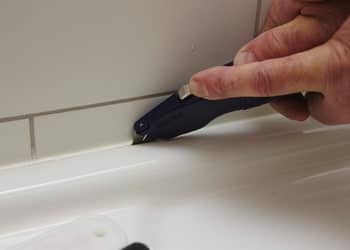
Silicone is cut out of the rim and corners, including the piece that hides under the tile lip.
Sanitary silicone is applied and tooled so water runs back into the bath.
Do not fill or splash the bath for 24 hours.
Symptoms
Steam sits there. The mould is in the silicone, not only on the tile.
A split corner lets bath water behind the rim and into the floor or the panel void.
A bead that has gone slimy has broken down and should be cut out, not painted.
If the panel floor is wet but the rim bead looks intact, look at the overflow and the pipes as well.
Quote
The job is quoted. These are the factors, not a menu of fixed prices.
A bath against one wall is less bead than a bath with two tiled ends and a tap deck.
Layers of old silicone in the corners add time.
An acrylic rim that has dropped may need the gap discussed before a bead is promised.
White is standard. A sanitaryware colour is quoted from the cartridge.
After the visit
Take bottles off the rim before the visit. After sealing, do not use the bath or wipe the new bead for 24 hours. Wipe the rim dry after later baths so water does not sit in the corner.
The rim joint lasts while the silicone stays bonded and the bath does not pull away from the wall. Acrylic that rocks on loose feet will open a new bead. A sound, supported bath with a clean joint is the one that stays tidy.
DIY
The rim looks like an easy tube job. The corner under the tile lip is where DIY beads are left thick, and that is where they split. If the bath rocks, silicone will not pull it back to the wall.
Questions
Yes. Acrylic, steel, and cast-iron rims are resealed where they meet the wall. The quote assumes the bath still sits against that wall. A bath that has dropped needs that said up front.
A corner can be the failed part, but silicone bonds badly to a half-removed bead. The quote usually covers the whole rim that shares that joint so the new silicone has a clean edge.
No. The rim is the joint you see. The panel, overflow, and pipes behind it are a different visit. Book bath panel sealing if the floor inside the panel is wet and the rim looks sound.
Twenty-four hours after the bead is finished. Filling it sooner marks the silicone and can open the joint.
From the edges, the corners, any tap-deck beads, the colour, and how much old silicone has to come out. Photos on the quote form or WhatsApp are enough to price the usual rim.
Related work
Areas we cover
Send the photo and the postcode on the form, or WhatsApp the same details. Water stays off the new bead for 24 hours.
Name the room and the joint. If a ceiling below is stained, say when the water appears.